3 min read

Preparing for the California Senate Bill 253 and 261: is your sustainability reporting ready?

Preparing for the California Senate Bill 253 and 261: is your sustainability reporting ready?

A new era of corporate accountability is dawning, and its epicentre is California. The introduction of Senate Bill 253 (SB 253), the Climate Corporate Data Accountability Act, and Senate Bill 261 (SB 261), the Climate-Related Financial Risk Act, represents a tectonic shift in mandatory corporate sustainability disclosure in the United States.

These bills move sustainability from a voluntary, 'nice-to-have' initiative to a hard compliance requirement, setting a rigorous new standard for large public and private companies doing business in California. For experts and leaders tasked with corporate reporting, this is more than just a regulatory hurdle – it’s an urgent call to action to integrate environmental, social, and governance (ESG) data with the same rigour as financial figures.

The new compliance imperative: from voluntary to vested

The California legislation places two core, non-negotiable demands on businesses:

  • SB 253: Greenhouse Gas (GHG) Emissions Disclosure: Requires companies with over $1 billion in annual revenue to publicly report their global Scope 1, Scope 2, and, critically, Scope 3 emissions. With Scope 3 often accounting for the vast majority of a company's climate impact, this mandate – starting with Scope 1 and 2 reporting in 2026 – demands an unprecedented level of data collection and accuracy, adhering to the GHG Protocol.
  • SB 261: Climate-Related Financial Risk: Applies to companies with over $500 million in annual revenue, requiring a biennial report on climate-related financial risks and the measures adopted for mitigation and adaptation. This disclosure must align with the widely recognised Task Force on Climate-related Financial Disclosures (TCFD) framework, with the first report due by January 2026.

The deadlines are immediate, and the penalties for non-compliance are substantial, reinforcing the need for a definitive, auditable reporting system. The challenge, however, isn't just generating the data – it's managing the complex workflow needed to transform raw metrics into a highly designed, compliant, and stakeholder-ready report.


Building a compliance-ready workflow with CtrlPrint

Successfully navigating SB 253 and SB 261 requires a platform that eliminates silos and connects every phase of the reporting journey, from initial data input to final, legally compliant publication. This is where a collaboration platform like CtrlPrint becomes indispensable. CtrlPrint connects clients, auditors, agencies, and regulators into one seamless environment – rather than working in silos.

1. Mastering the data chaos (drafting)

The data required for SB 253 (GHG metrics) and SB 261 (TCFD-aligned risk) is often fragmented, sitting across multiple systems – from internal ERPs to sustainability data platforms. Trying to manually consolidate this into a designed report introduces unacceptable risk of error and version confusion.

  • CtrlPrint’s solution: Our platform streamlines the Drafting phase. Content teams start working directly in InDesign, Word, and Excel, all connected through CtrlPrint. This ensures a single source of truth for figures and narratives. The secure cloud platform ensures version control and real-time, role-based access, providing fine-grained access control to all team members.

2. Ensuring accuracy and auditability (review & collaboration)

Given the mandated limited assurance for SB 253's Scope 1 and 2 emissions from 2026, every piece of data and narrative must be rigorously vetted. A transparent audit trail is non-negotiable.

  • CtrlPrint’s solution: Internal and external stakeholders review documents via CtrlPrint Review. Our built-in TrackChanges captures all edits transparently and securely, ensuring a complete and auditable history. Role-based permissions keep workflows structured and compliance-ready.

3. Future-proofing compliance (compliance & tagging)

While the California bills do not currently mandate the digital taggings seen in global frameworks, the regulatory tide is turning towards structured, machine-readable reporting, as exemplified by the EU’s Corporate Sustainability Reporting Directive (CSRD) and its ESRS XBRL taxonomy. Adopting future-proof tools now will save significant rework later.

  • CtrlPrint’s solution: The CtrlPrint XBRL Tagger enables companies to meet regulatory requirements such as ESEF/ESRS/UKSEF and other regional requirements (e.g., DK GAAP in Denmark). Tagging happens in a streamlined interface, directly linked to the reporting documents.

4. Maintaining brand fidelity (design & publication)

The final report must not only be compliant but also an accurate reflection of your brand's commitment and design standards.

  • CtrlPrint’s solution: Since the report is built in Adobe InDesign, the final result keeps full design and brand fidelity. Furthermore, a lightweight Integration allows for smooth transfer of content between reporting, ERP, and other systems, without requiring a costly integration project. This allows for the delivery of instant report outputs such as fully designed PDFs, Print-ready files, Online interactive reports, and iXBRL packages.


The seamless advantage

SB 253 and SB 261 signal a future where financial and sustainability reporting are inextricably linked. The success of your compliance strategy rests on your ability to break down the traditional departmental silos.

CtrlPrint connects your clients, auditors, creative agencies, and internal teams into one seamless environment. By unifying content creation, review, design, and compliance tagging in a single, auditable platform, you stop merely reacting to regulation and start strategically leading your organisation’s path toward a transparent and sustainable future.

Request a demo of CtrlPrint here.

Vicosight Integrate: a complete feature guide

Vicosight Integrate: a complete feature guide

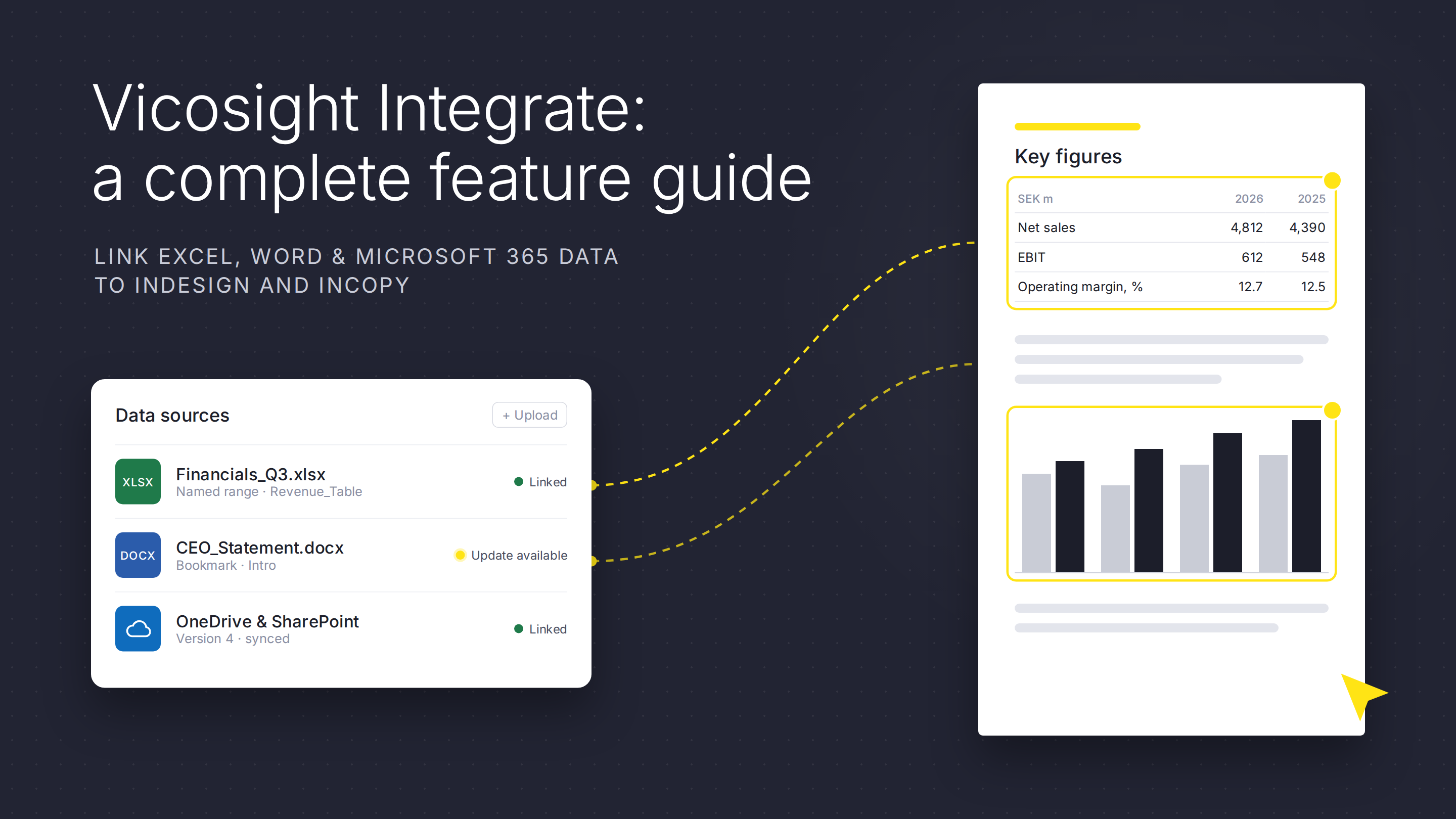
Vicosight Integrate is a data connectivity feature that enables you to link data sources directly to your InDesign and InCopy documents, reducing...
Read More
Vicosight Integrate: Chart Studio and other updates

Vicosight Integrate: Chart Studio and other updates

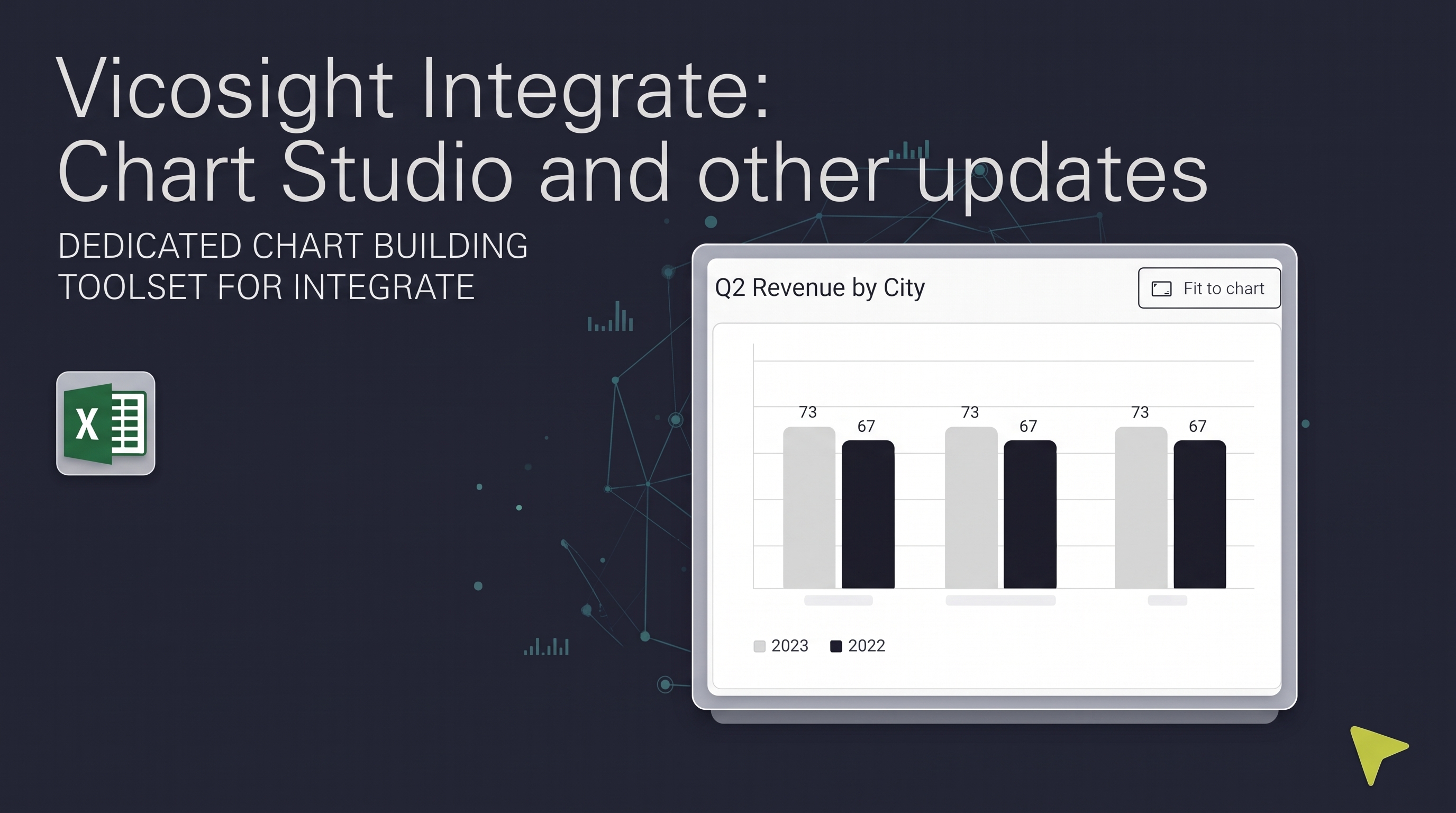
Over the past several months, Vicosight Integrate has received a series of updates introducing new capabilities and improvements to data handling,...

Read More
Crafting Vicosight new brand identity: evolving a 25-year legacy in corporate reporting

Crafting Vicosight new brand identity: evolving a 25-year legacy in corporate reporting

CtrlPrint has officially transformed into Vicosight, evolving from a trusted production tool into a modern digital ecosystem. Transitioning a 25-year...

Read More
Omnibus I, results and new agreements on CSRD: simplified sustainability reporting

Omnibus I, results and new agreements on CSRD: simplified sustainability reporting

European Parliament approves Omnibus I, simplifying sustainability reporting rules, reducing administrative burden, and narrowing the scope of...

Read More
What is CSRD? Understanding the EU’s Corporate Sustainability Reporting Directive (Updated 2026)

What is CSRD? Understanding the EU’s Corporate Sustainability Reporting Directive (Updated 2026)

Learn about the CSRD directive and how it enhances sustainability reporting. Understand its impact on businesses and how CtrlPrint can help you...

Read More
What is ESEF (European Single Electronic Reporting)?

What is ESEF (European Single Electronic Reporting)?

Learn about ESEF regulations, the importance of ESEF taxonomy and tagging, and how CtrlPrint helps companies produce compliant digital financial...

Read More