How AB Sagax saves about a week per person for each report with Vicosight Integrate
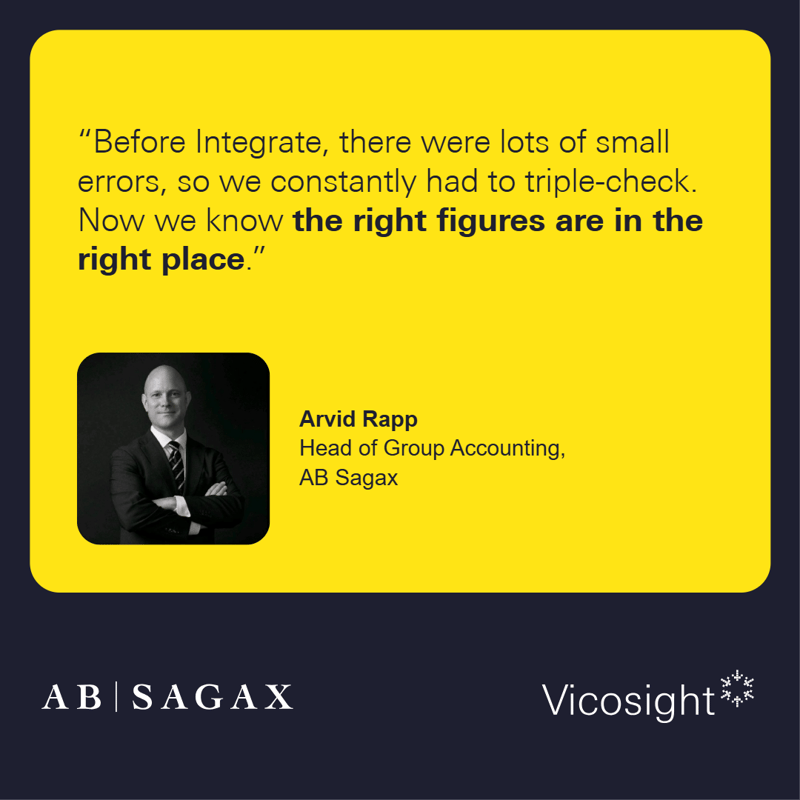
Arvid Rapp, Head of Group Accounting at AB Sagax, shares how Integrate links figures from Excel to the report, saving around 40 hours per report.
3 min read

Agnes Sundblad : Published Updated
As the conversation around sustainability matures, environmental, social, and governance (ESG) performance has become more than a moral statement - it’s an operational and investment priority. What was once considered a voluntary effort is now a business imperative, driven by rising regulatory expectations such as the EU’s Corporate Sustainability Reporting Directive (CSRD), investor scrutiny, and public accountability.
For leaders and sustainability professionals, one question keeps coming up: How can we translate data into impact? That’s where ESG Key Performance Indicators (KPIs) and metrics come in.
At their core, ESG metrics are the raw data points - the tonnes of CO₂ emitted, the energy consumed, the percentage of women in management, or the number of ethics complaints. But KPIs (Key Performance Indicators) go a step further: they turn those numbers into context. KPIs measure your progress towards specific goals, such as “reduce Scope 1 and 2 emissions by 42% by 2030” or “achieve a 40% female leadership ratio by 2027.”
Think of it as a recipe: your metrics are the ingredients, and your KPIs are the finished dish. Metrics describe performance at a point in time, while KPIs anchor that information to targets and thresholds, turning raw data into a management tool. Neither can stand alone, and both require consistency, strong governance, and a clear definition of what success looks like.
A robust ESG KPI framework helps you benchmark progress, build transparency, and strengthen trust with investors, customers, and employees alike. Above all, it transforms your sustainability commitments from intention to measurable outcomes.
Environmental KPIs reveal how well your organisation is managing its direct and indirect environmental impact.
Examples include:
For companies working towards CSRD or aligning with SBTi pathways, consistent measurement boundaries and standardised emission factors are key.
Social KPIs measure how an organisation supports its people and wider society.
Typical examples include:
Pairing workforce metrics with engagement or learning data can reveal critical insights into retention and motivation.
Governance indicators ensure leadership integrity and operational discipline.
Examples include:
When supported by structured reporting workflows, governance KPIs demonstrate that your organisation not only has policies in place but also follows through with consistent measurement and continuous improvement.
Clear, actionable KPIs connect long-term ambitions to measurable results. To make them effective:
For instance, a manufacturer might pair operational metrics like equipment effectiveness or scrap rate with environmental KPIs such as energy intensity per unit produced, creating a holistic picture of performance and improvement opportunities.
A structured approach helps you stay efficient, compliant, and future-ready.
CtrlPrint streamlines the reporting workflow across three main stages, including Drafting, Review & Collaboration, and Compliance & Tagging. The secure cloud platform ensures version control and real-time, role-based access, providing fine-grained access control to all team members during drafting and collaboration. Our collaborative platform connects clients, auditors, agencies, and consultants into one seamless environment, rather than working in silos.
For compliance, CtrlPrint XBRL Tagger enables companies to meet digital reporting requirements such as ESEF/UKSEF or DK GAAP in Denmark, and to prepare for ESRS/XBRL tagging once the EU makes it mandatory. The tagging happens in a streamlined interface, directly linked to your reporting documents. This traceable, team-based approach to reporting delivers confidence and consistency across every cycle.
In a landscape shaped by regulation, investor scrutiny, and stakeholder expectations, credible ESG KPIs provide the proof behind your promises. They turn “we aim to” into “we achieved,” closing the gap between aspiration and accountability.
By combining solid data foundations with effective collaboration platforms like CtrlPrint, organisations can not only meet new reporting requirements - they can build sustainable value that resonates across markets, employees, and communities.
Deliver compliant, credible sustainability reports with CtrlPrint - the collaborative platform built for secure, transparent, and efficient reporting. The final reports, built in Adobe InDesign, keep full design and brand fidelity.
Arvid Rapp, Head of Group Accounting at AB Sagax, shares how Integrate links figures from Excel to the report, saving around 40 hours per report.
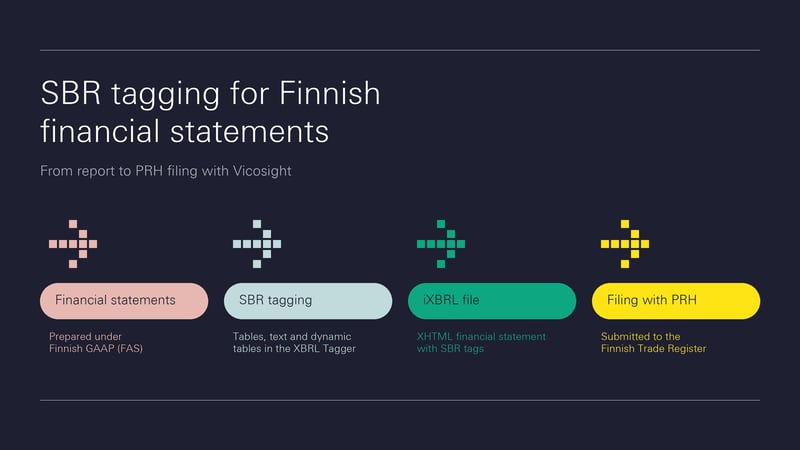
Discover how to navigate Finland's SBR taxonomy for iXBRL tagging with Vicosight, ensuring compliance for your digital financial statements.
Take part in Vicosight’s State of Corporate Reporting 2026 benchmark. 8–10 minutes, anonymous, and every participant can receive the benchmark report.

SB 253 and SB 261 are here. See how CtrlPrint helps companies manage climate data, audits, and compliant sustainability reporting.

The gap between financial and sustainability reporting is closing. Learn how to manage the "double crunch" of integrated reporting deadlines with...

Discover what sustainability reporting is, why it matters, and how to comply with GRI, CSRD, and TCFD. Learn best practices, business benefits, and...