AI in corporate reporting: a Vicosight whitepaper
In recent years, the audience for corporate reporting has fundamentally changed. While we still write for the human analyst, we are now equally...
2 min read

This checklist provides a concise, strategic reference designed for reporting teams to proactively identify, mitigate, and govern the nine most critical risk areas in the annual and sustainability reporting cycle. By focusing on governance, process control, and early-stage compliance, organizations can transform their reporting function from a period of high-stress risk management into a source of auditable clarity and stakeholder trust.
Why it matters
Unclear ownership is a common cause of reporting delays, inconsistencies, and late-cycle rework.
What to ensure
Why it matters
Incomplete understanding of reporting requirements leads to missing disclosures, duplicated work, and regulatory risk.
What to ensure
Why it matters
Auditors expect full traceability from source data to final narrative and figures. Weak traceability increases audit findings and rework.
What to ensure
Why it matters
Parallel drafts and uncontrolled edits introduce operational risk and make it difficult to evidence accuracy.
What to ensure
Why it matters
Disconnected workflows and unmanaged communication channels increase errors and slow progress.
What to ensure
Why it matters
Tagging performed too late in the cycle is a major cause of filing delays and validation issues.
What to ensure

Why it matters
Draft reports contain sensitive financial and ESG information. Access must be strictly controlled and compliant.
What to ensure
Why it matters
Inconsistent messaging, tone, or design reduces clarity and weakens trust among investors and stakeholders.
What to ensure
Why it matters
Reporting quality improves only when issues and lessons are captured and addressed systematically.
What to ensure
High-performing reporting teams reduce risk through structured workflows, controlled versioning, audit trails, secure collaboration and early-stage tagging and validation.
CtrlPrint supports many of these practices. If you would like to explore how, we are happy to discuss. Book a demo or contact us.

In recent years, the audience for corporate reporting has fundamentally changed. While we still write for the human analyst, we are now equally...
The modern corporate reporting landscape is becoming significantly more demanding as organizations face new regulations, tighter deadlines, and...
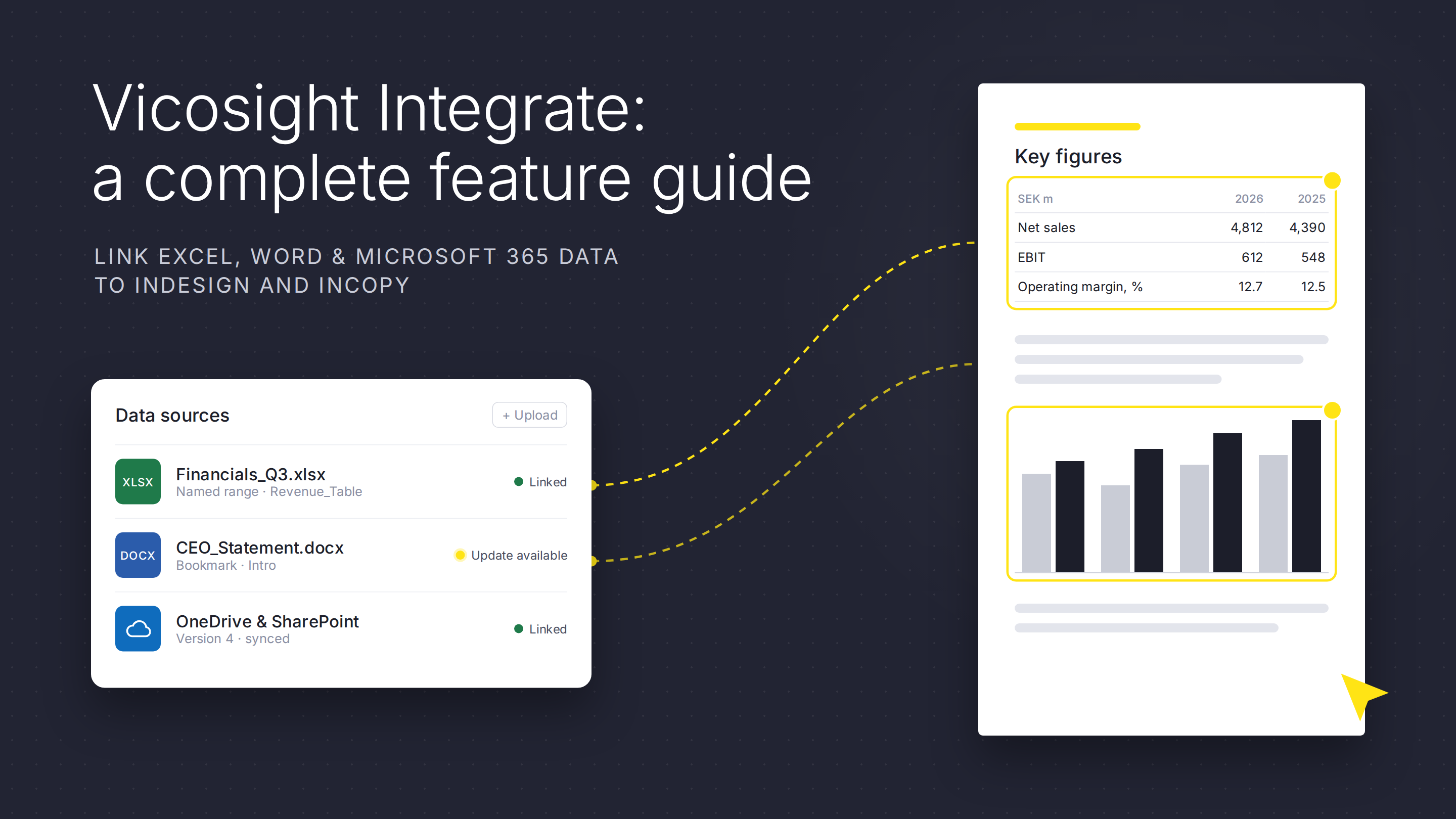
Vicosight Integrate is a data connectivity feature that enables you to link data sources directly to your InDesign and InCopy documents, reducing...
.jpg)
Balancing AI in reporting with audit integrity is crucial. Learn how CFOs can integrate AI within a secure platform to enhance efficiency while...

Narrative reporting turns static numbers into financial signalling. We explore how to align the CFO’s data with the storyteller’s context to create...

 Per Närstad : Mar 25, 2026, 12:54:38 PM
Explore the strategic importance of corporate reporting in shaping investor perception and enhancing enterprise value beyond mere compliance.